The shoulder is one of the most mobile joints in the body, which also makes it one of the most vulnerable to strain, instability, and injury. Effective shoulder rehabilitation focuses on restoring proper movement, strengthening stabilizing muscles, and gradually returning the shoulder to normal daily function.
A structured rehabilitation approach helps ensure the shoulder heals properly while reducing the risk of reinjury or chronic pain.
Shoulder rehabilitation typically follows a progressive sequence designed to support safe and effective recovery.
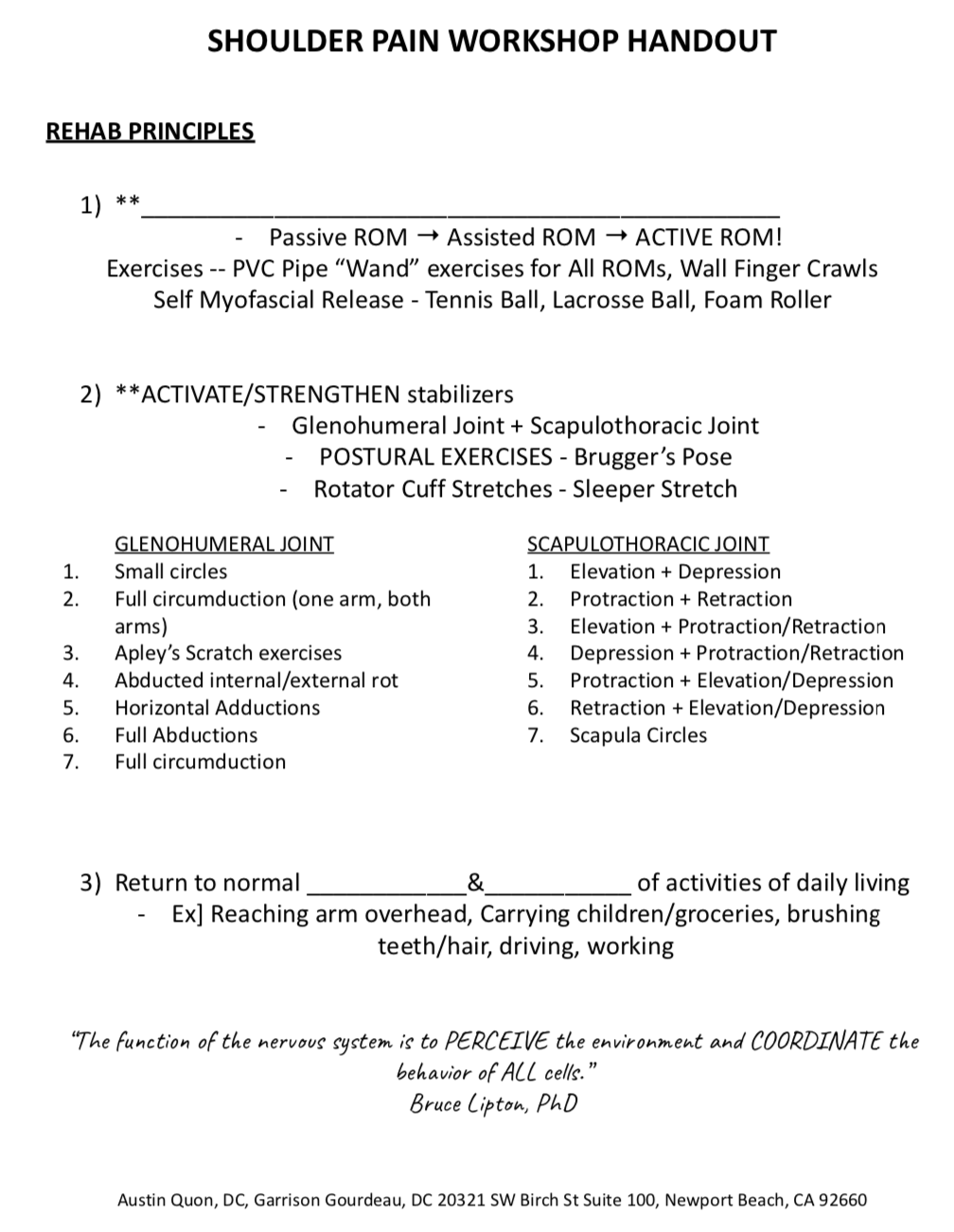
The first phase focuses on restoring range of motion. This often begins with passive movement, progresses to assisted movement, and eventually transitions to active range of motion exercises. Gentle techniques such as guided mobility drills, wall-assisted movements, and self-myofascial release may be used to reduce stiffness and improve joint mobility.
The second phase emphasizes activation and strengthening of key stabilizing muscles. This includes muscles that support both the glenohumeral joint, which is the primary shoulder joint, and the scapulothoracic joint, which controls shoulder blade movement. Proper stabilization of these structures is essential for coordinated shoulder motion and long-term joint health.
Targeted exercises may also focus on postural control and rotator cuff support to improve shoulder mechanics during daily activities.
As strength, coordination, and mobility improve, rehabilitation efforts shift toward restoring normal movement patterns used in everyday life. This includes activities such as reaching overhead, lifting or carrying objects, personal grooming tasks, driving, and work-related movements.
The goal of shoulder rehabilitation is not only pain relief but also the ability to move confidently and comfortably during routine activities without fear of reinjury.
Shoulder pain can have many underlying causes, and improper exercise selection or technique may worsen symptoms. If you are experiencing persistent shoulder discomfort, stiffness, or weakness, professional guidance can help ensure safe and effective recovery.
At Quon Chiropractic in Costa Mesa, California, shoulder rehabilitation strategies are often incorporated into personalized care plans that combine chiropractic adjustments, corrective exercises, and movement education. Contact Quon Chiropractic to schedule an appointment and learn how a structured shoulder rehab approach can support your recovery and long-term shoulder health.